
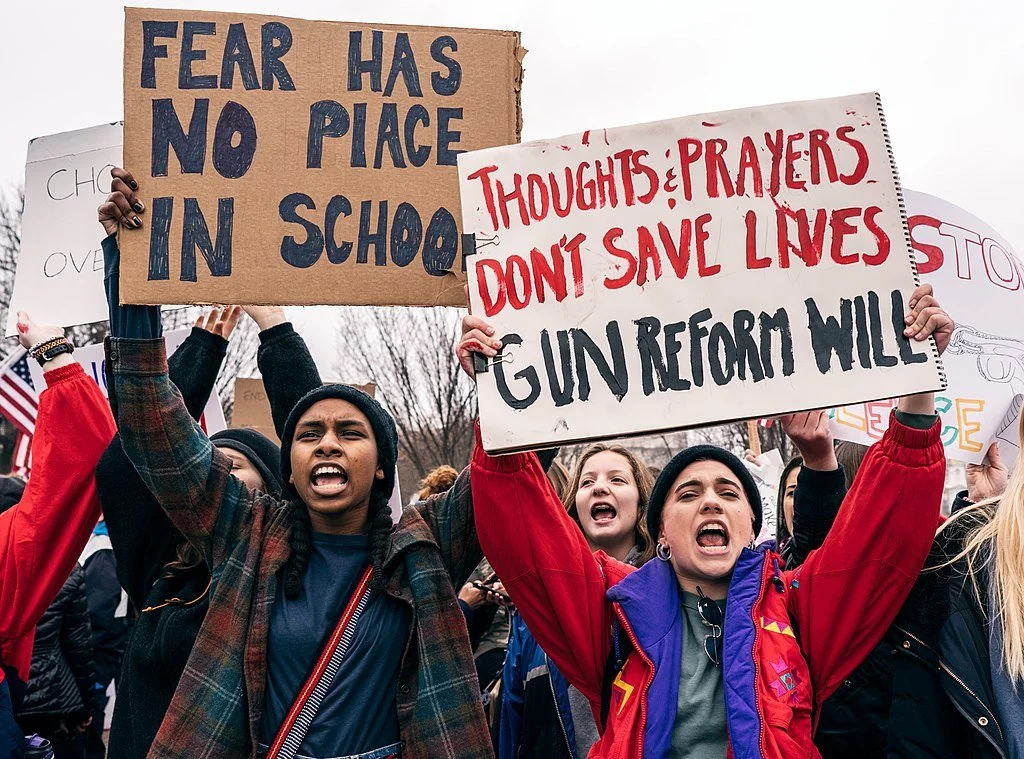

SAFETY

Accountability, Prevention, and True Public Safety
True safety is built through prevention, accountability, and opportunity—not fear or overreliance on punishment. The proposals in this section invest in proven violence-prevention strategies, expand second chances, and focus law enforcement resources on the threats that actually endanger our neighborhoods. Over my career at the Capitol, I helped craft reforms that reduced unnecessary incarceration while strengthening community-based responses to harm, and this agenda continues that work.
These policies aim to keep families safe by ending mandatory minimums that don’t deter violence, expanding expungement and earned release so people can rebuild their lives, and investing in group violence intervention and responsible gun safety measures. Public safety must protect victims, respect civil rights, and address the root causes of harm—so every block in Senate District 65 can feel secure and whole.
Make Violence
Prevention Funding
Permanent
This proposal would expand and make permanent Minnesota’s Public Safety Innovation funding stream so community-centered prevention strategies receive sustained support instead of short-term appropriations that ebb and flow with political cycles. Originally developed to scale up innovation grants for community violence interruption, restoration of trust, and collaborative work between law enforcement and grassroots organizations, this approach recognizes that traditional policing alone cannot meet every public safety need and that long-term investment saves lives and stabilizes neighborhoods.
By codifying stable funding for outreach teams, co-response models with social workers and mental health professionals, and locally driven prevention programs while also supporting law enforcement capacity where needed, Minnesota can reduce violence, restore community confidence, and provide a more diverse set of responses to harm that law enforcement is not best suited to handle. Making this funding permanent signals that public safety is both about effective policing and prevention, intervention, and community resilience, addressing our urgent public safety needs with research-backed strategies that meet communities where they are.
End
Mandatory
Minimums
This proposal would repeal mandatory minimum sentences that tie the hands of prosecutors and judges and prevent them from responding to the actual facts of a case. These rigid penalties remove incentives to resolve cases through responsible plea agreements, clogging courts and delaying trials for victims and families seeking closure. Mandatory minimums also harm public safety by leaving individuals on extended pretrial release while cases drag on, without a path to either meaningful rehabilitation or appropriate incapacitation.
The policy is fundamentally disproportionate and racially desperate because it applies mainly to drug trafficking and weapons possession, while far more serious harms such as sexual assault, assault, or murder remain subject to judicial discretion. Repealing mandatory minimums will make Minnesota safer by restoring balance to sentencing, speeding justice, and allowing courts to focus resources on the people who pose the greatest risk.
Fund
Group Violence
Intervention
This proposal would expand funding for Group Violence Intervention (GVI) as a public health and diversion-first approach to reducing serious harm. Research and local experience show that a large share of shootings and retaliatory violence is driven by a very small number of people and networks, meaning focused outreach can save lives without broad over-policing. GVI pairs direct community messengers, social services, and credible support with clear, lawful accountability when violence continues, giving participants a real path out before the system defaults to prison.
Ramsey County Attorney John Choi’s leadership has demonstrated that this model can lower shootings, rebuild trust, and connect high-risk individuals to jobs, treatment, and mentoring instead of deeper system involvement. Investing in GVI treats violence like the contagious public health crisis it is—interrupting cycles early, diverting people from incarceration, and making neighborhoods safer through precision rather than punishment.
Expand Automatic Expungements For
All Offenses
This proposal would create automatic expungement within ten years at most for all offenses for individuals who have not reoffended, while allowing shorter timelines for many offenses as current law already provides. People who have demonstrated stability should not carry a lifetime sentence in the form of a record that blocks housing, employment, education, and licensing.
Automatic relief would remove the costly court process, reduce racial disparities created by discretionary systems, and help employers fill jobs with qualified workers. Expungement is a public safety strategy that rewards change and strengthens families rather than punishing people forever for their worst day.
Invest in
Earned Release
Incentive Programs
This proposal would provide dedicated funding and staffing to fully implement the Minnesota Rehabilitation and Reinvestment Act (MRRA) so earned release becomes a meaningful pathway, not an unfunded promise. Additional counselors, treatment slots, education programs, and case managers would allow incarcerated people to complete the programming required to demonstrate change and prepare for reentry.
Earned release improves safety by tying time served to verified progress, connecting people to housing and work before they return home, and reducing recidivism. Investing in MRRA is smarter than paying for longer incarceration that delivers no better outcomes.
Smart Gun
Sales Transition
Requirement by 2050
This proposal would require that all new firearm sales in Minnesota be smart-gun technology by 2050, giving manufacturers, retailers, and gun owners a long, predictable timeline to adapt. Smart guns that recognize authorized users can prevent stolen weapons from being used in crimes, reduce accidental shootings by children, and protect law enforcement from having their own firearms turned against them. A phased transition would include state support for testing standards, consumer incentives, and procurement pilots so the technology becomes reliable and affordable before the requirement takes effect. Just as cars evolved to include seat belts and airbags, firearms can evolve to include basic safety features that save lives while respecting lawful ownership.
Fully Fund and
Stabilize Crime
Victim Services
This proposal would seek to establish dedicated, stable funding streams to ensure every crime victim and survivor in Minnesota can access the support they need without delay. In addition to general appropriations, the state would direct a portion of bail forfeiture proceeds and other court-generated funds into a Victim Services Trust, guaranteeing resources for counseling, emergency housing, legal advocacy, and restitution assistance.
Crime takes a deep emotional and financial toll on survivors and their families, and underfunded support systems leave many without the help needed to heal and participate safely in their communities. By fully funding victim services through both regular budgeting and structured revenue sources, Minnesota can provide equitable, trauma-informed care statewide and uphold justice not just in prosecution but in recovery.
Pass
the Minnesota
Survivors Justice Act
This proposal would enact a Survivor’s Justice Act to transform the way Minnesota’s criminal legal system treats people whose actions stem from victimization, coercion, or exploitation. Mirroring leading models, the Act would allow judges to consider a defendant’s history of trafficking, abuse, or other trauma in determining whether imprisonment is necessary for public safety and whether alternative accountability, treatment, and restorative paths would better serve survivors and communities.
Rather than blanket sentencing formulas that ignore context, the law would expand judicial discretion, require comprehensive trauma assessments, and invest in community-based services that address root causes of harm. A Survivor’s Justice Act does not excuse violence; it ensures that justice accounts for the full human story, reduces recidivism, and promotes healing for individuals and families affected by cycles of trauma and punishment.
Ban
Weapons
Of War
This proposal establishes heightened scrutiny and regulation of weapons designed for war by enacting an Assault Weapons Ban and reinstating Minnesota’s Binary Trigger Ban. These policies are focused on limiting access to firearms and devices engineered to maximize lethality in civilian settings and to reduce the scale and speed of mass casualty violence.
Assault-style firearms are built for rapid, high-impact firepower, enabling shooters to inflict significant harm in a short period of time and reducing opportunities for escape or intervention. Binary triggers intensify this threat by allowing a firearm to fire on both the pull and release of the trigger, effectively doubling the rate of fire and closely mimicking automatic weapons while exploiting gaps in current law.
Because these weapons and devices are designed for battlefield conditions rather than hunting or self-defense, they pose a disproportionate risk to bystanders, first responders, and entire communities. Minnesotans should not have to accept military-grade firepower as a feature of everyday life. Applying heightened scrutiny to these weapons is a necessary step to reduce preventable violence, support law enforcement safety, and protect public spaces across our state